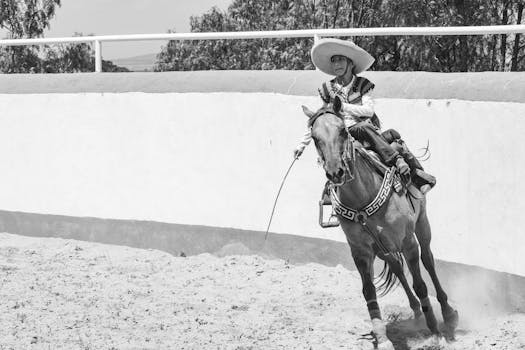
A captivating myth, deeply entrenched in our collective consciousness, portrays the tireless equine athlete traversing hundreds of leagues in a single diurnal cycle. This romanticized vision, however, clashes sharply with a more nuanced historical reality. Determining a horse's comfortable daily range is not a straightforward arithmetical exercise; rather, it’s a complex equation with numerous interdependent variables. To unravel this enigma, we must abandon simplistic assumptions and embark on a thorough historical investigation.
Consider, for instance, the countless artistic representations—paintings and cinematic epics—depicting cavalry charges. These dramatic portrayals often feature steeds executing prolonged, breakneck gallops; a feat seldom achievable in practical, real-world scenarios. While military campaigns undoubtedly demanded considerable equine exertion, meticulous strategizing always prioritized the animals' well-being. Cavalry units employed a tactical approach, executing short, powerful bursts of speed punctuated by ample periods of repose and decelerated travel. This strategic pacing, analogous to a marathon runner's careful energy management, proved essential for operational success. The analogy is apt: sustained, breakneck sprints are simply not tenable.
Equine breed profoundly impacts endurance. A robust draft horse, meticulously bred for prodigious hauling, is ill-equipped for extended journeys compared to a lighter breed like the Arabian, selectively honed for phenomenal stamina and resilience. Even within a specific breed, substantial individual variations exist. Just as human athletes possess unique innate capabilities, independent of rigorous training, so too do equines. A horse's physical conformation, musculature, and inherent predisposition to specific exertion types all heavily influence its capacity for sustained travel.
Terrain also presents a formidable obstacle. A smooth, level track effortlessly accommodates an equine athlete far better than rough, craggy terrain or treacherous bogs. The strain on the horse's limbs and joints is immense, drastically curbing both velocity and distance capabilities. Envision attempting a marathon on uneven, age-worn cobblestones instead of a meticulously prepared track—the disparity is immediately obvious. Moreover, the condition of a horse's hooves is paramount; neglect can readily induce lameness, severely restricting its journey.
The rider's expertise and experience are equally crucial. A seasoned equestrian instinctively understands a horse's physical limitations and can effectively modulate its pace, ensuring sustained stamina. Conversely, an unskilled rider may unwittingly overtax the animal, resulting in injury or exhaustion. The rider is not merely a passive occupant; rather, they are a fundamental component of the horse-rider dyad, profoundly affecting its overall performance.
Finally, the weight borne by the horse critically affects its endurance. Any added weight, be it equipment, provisions, or a heavily laden pack, directly diminishes the animal's staying power. For example, a steed bearing a heavily armored knight would traverse significantly shorter distances daily compared to one carrying only minimal baggage. The comparison to an automobile's fuel efficiency—a heavily laden vehicle versus one with minimal cargo—aptly illustrates this principle.
Drawing upon historical data and a sound comprehension of equine physiology, a reasonable estimate for a horse's average daily progress under optimal conditions falls within the range of 30 to 40 miles. However, this figure can readily plummet to 10 to 20 miles under adverse conditions or with increased load.
The enduring myth of the indefatigable steed, a tireless engine of conquest and commerce, distorts our comprehension of history in profound ways. This misconception, deeply embedded in popular imagination, demands critical examination; its persistence obscures the logistical realities of past eras. Misinterpretations of military campaigns, trade expeditions, and voyages of exploration frequently stem from a gross overestimation of equine capabilities. The painstaking planning, the logistical nightmares, the sheer physical limitations – these crucial factors are often relegated to the footnotes of history, overshadowed by romanticized narratives of tireless mounts.
Furthermore, a cavalier disregard for the physiological boundaries of the equine athlete jeopardizes animal welfare. This romantic ideal, far from being harmless, frequently translates into neglect and mistreatment. Pushing these magnificent creatures past their inherent physical tolerances invites catastrophic injury, debilitating exhaustion, and even premature demise. The analogy to a human marathoner pushed beyond their limits is apt, but the consequences for the horse are often far more devastating and irreversible. Responsible equine husbandry hinges on recognizing and respecting these limits.
Accurate historical reenactments and recreations suffer significantly from this misconception. Strive for authenticity, those involved in these endeavors must; otherwise, attempts to replicate fantastical feats of equine stamina undermine historical accuracy and expose the animals to unacceptable peril. This is akin to constructing a historical vessel without fully grasping the constraints imposed by the era's shipbuilding techniques and materials – a recipe for disaster and an inaccurate representation.
Beyond the realm of historical fidelity, a truly insightful appreciation for the horse's contributions to human civilization depends on understanding both its prodigious abilities and its inherent limitations. Only by acknowledging these equine realities can we appreciate their crucial contributions not as mere beasts of burden, but as living creatures whose wellbeing was inextricably linked to their effectiveness and longevity. We must transcend simplistic notions of brute strength and unyielding speed to grasp the full nuance of their historical impact. For further insights into responsible adventure travel, consider reading our article on best-active-vacations. Equally important is understanding the impact of luxury-adventure-tourism-unexpected-truths on both humans and animals. For those seeking a slower pace, our guide to adventure-holidays-for-over-50s offers a different perspective. Those interested in planning their next adventure should check out our piece on best-adventure-vacations-in-the-world. And for those seeking solitude, best-adventure-destinations-introverted-explorer provides valuable insight.
In summation, the deeply ingrained image of the tireless warhorse thundering across continents obscures a more complex reality. By grappling with the multifaceted determinants of equine endurance, we cultivate a more accurate, empathetic understanding of their pivotal role throughout history. Let us discard the romanticized fables and embrace the scientific truths of equine physiology and history. Only through this rigorous approach can we fully appreciate the extraordinary—and finite—capacities of these remarkable animals, ensuring both historical accuracy and their continued wellbeing.